
Building Social Skills and Classroom Community
Building Social Skills and Classroom Community
Research on outdoor learning consistently highlights its benefits for fostering social skills and strengthening classroom community. Learning in outdoor spaces encourages students to work together, communicate effectively, and build trust in ways that traditional classroom settings may not always allow. The open, unstructured nature of outdoor environments provides a natural setting for collaboration, active listening, and shared problem-solving.
What Students Learn Outdoors
When students engage in cooperative outdoor activities, they learn how to navigate challenges as a group, developing skills such as:
- Empathy
- Cooperation
- Patience
- Problem-solving
These experiences help create a classroom culture where students feel connected, valued, and supported all key factors in improving engagement and overall learning outcomes.
Example: “The Human Knot” Activity
One example of an effective community-building activity is the Human Knot.
This cooperative game requires students to:
- Stand in a circle, hold hands with two different people, and
- Work together to untangle the knot without letting go.
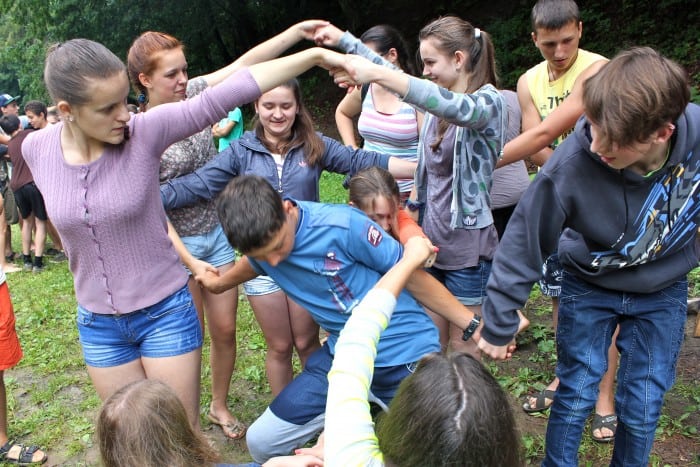
The activity naturally promotes teamwork, communication, and persistence as students plan, adjust, and encourage one another.
It also supports the development of the “I Love a Challenge” mindset by giving students a structured chance to overcome frustration through cooperation and creative thinking.
Outdoor Learning & Emotional Growth
Outdoor learning supports social-emotional development by removing some of the traditional pressures of the classroom. Students who may feel hesitant to participate indoors often:
- Engage more freely outside, where movement, laughter, and fresh air reduce anxiety.
- Build confidence through group tasks and shared successes.
- Strengthen relationships and feel more included in the learning community.
Over time, these experiences lead to a more positive, inclusive, and emotionally safe classroom climate.
Why This Matters
Incorporating outdoor activities that promote teamwork and communication can help students develop lifelong interpersonal skills.
Through cooperative challenges, nature-based problem-solving, or team-building games, teachers can build both social competence and a strong sense of belonging.
Take Me Outside Day
Events like Take Me Outside Day captures the spirit of outdoor learning. On this day, students step outside to move, explore, and learn together building connection, confidence, and teamwork in real, hands-on ways. Activities like group challenges or literacy stations help strengthen communication and resilience, showing that learning doesn’t have to stay inside four walls.