Reflection #6 – Computational Thinking
Before I started exploring the idea of computational thinking, I used to think it was all about coding lines of numbers, symbols, and screens full of logic that didn’t feel very “elementary.” But the more I’ve learned, the more I’ve realized that computational thinking isn’t about computers at all it’s about how we think when we solve problems.
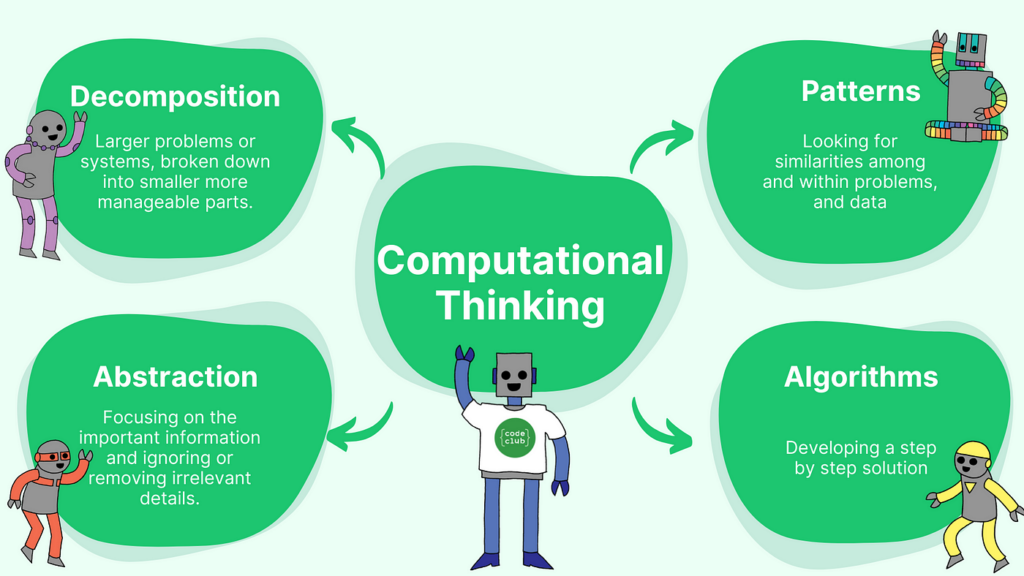
At its heart, computational thinking is about breaking big problems into smaller steps, recognizing patterns, and finding creative, logical ways to solve them. In other words, it’s about teaching students how to think like problem solvers. That mindset fits perfectly with the BC Curriculum’s Thinking Core Competency, and it can show up in so many areas not just in technology classes.
In the classroom, I see myself using computational thinking through hands-on, engaging activities that help students build these skills naturally. For example, in Math, students could work together to create step-by-step instructions for solving word problems just like writing an algorithm. In Language Arts, I could have students use pattern recognition when writing stories (identifying story structure, cause and effect, and character patterns). Even in Physical Education, computational thinking can show up through designing movement sequences or creating “If this, then that” strategies for team games.
I also love how computational thinking fits into Applied Design, Skills, and Technologies (ADST). Students could design a simple project, like building a paper bridge or coding a Scratch story, and use the design process to test, revise, and improve. That “try, test, and improve” cycle encourages resilience and reflection two skills that matter far beyond the classroom.
In a 21st-century learning context, computational thinking helps students see challenges as puzzles instead of roadblocks. It teaches them that there isn’t always one right answer just different ways to think it through. My goal is to create a classroom where students aren’t afraid to experiment, fail, and try again, because that’s what real learning looks like.